Are government-owned grocery stores a solution to food insecurity in Philadelphia?
 January 21, 2026
Category: Featured
January 21, 2026
Category: Featured

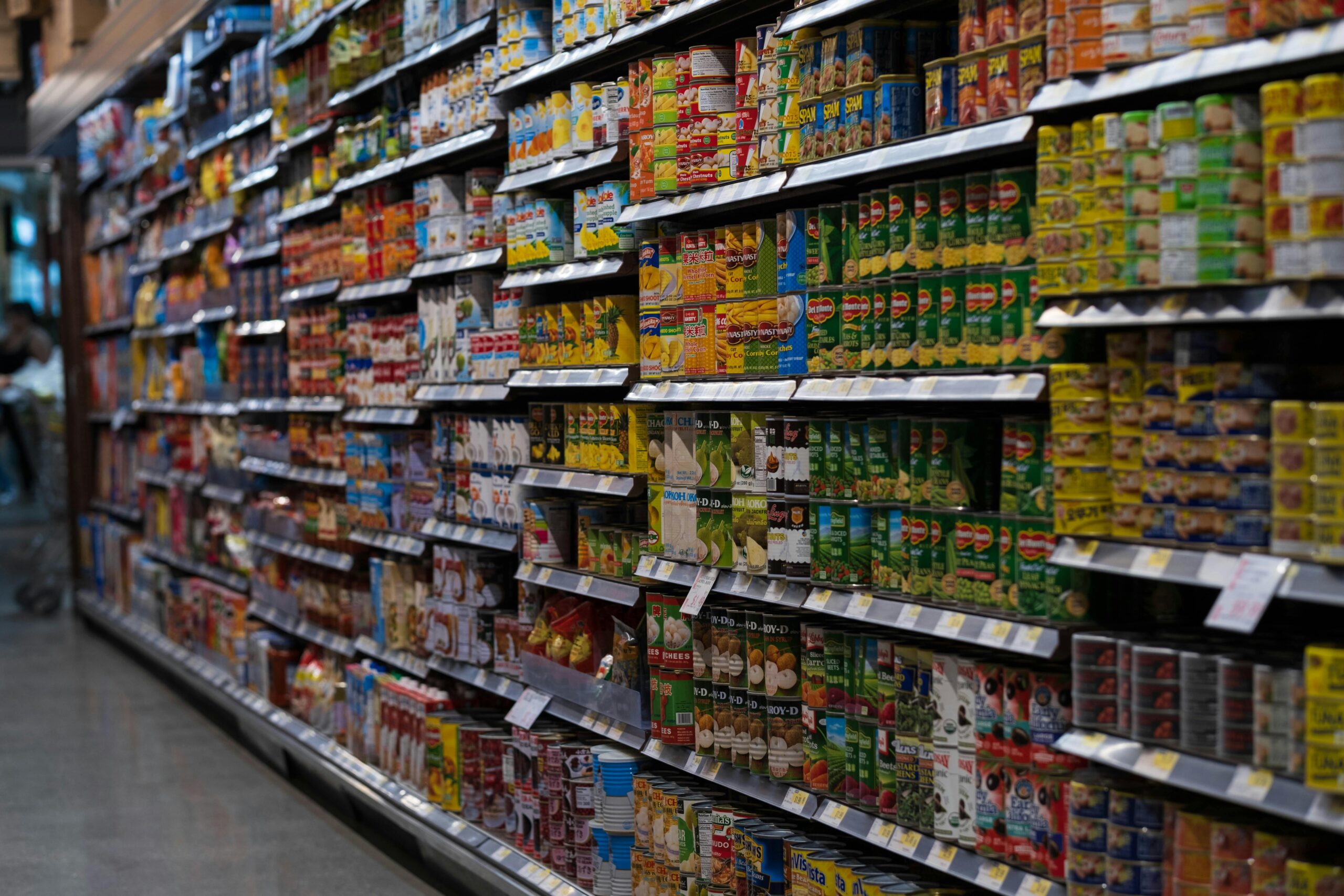
Stock photo of a grocery store aisle. Photo courtesy of Pexels.
According to a 2023 Feeding America study, 17% of the population in Philadelphia is food insecure, with the average cost for a meal coming in at $3.96. In New York, newly elected Mayor Zohran Mamdani made a campaign promise to voters to open five government-owned grocery stores that would help combat food insecurity.
The idea was popular with his supporters, but it’s far from new. Proposals for public grocery stores across the country are gaining traction, and a few already exist in places with high food insecurity. Could this idea work in Philadelphia, where roughly 30% of residents rely on SNAP, and have been subjected to new work requirements since late last year?
Philadelphia’s poverty rate is around 20% according to last year’s Pew State of the City Report. In many low-income areas, large retailers are hesitant to open stores because they don’t think the community has enough purchasing power to make the location highly profitable, regardless of demand. Publicly-owned markets could pose a potential solution to this issue.
Government-owned grocery stores: how they work, challenges, and successes
Government-owned grocery stores, or public grocery stores, are run by city, state, or federal governments, which generally don’t make a profit and instead focus on lower costs for their shoppers.
The Mamdani campaign offered a vision of these stores that would ideally operate in government-owned buildings to save money on rent. These stores would also employ government workers.
Public grocery stores remain an experiment that has seen successes and failures. There is a municipally-owned grocer in St. Paul, Kansas, which opened in 2008. This came after St. Paul went two decades without its own grocery store.
The store was opened by the city and its two partners, the local CDC and Heartland Rural Electric Cooperative. The city bought the store with a zero-interest USDA loan, but left the management to a couple with former grocery store experience.
But St. Paul’s population is about 600 people, and the grocery store employs 15 people. In a city where the population is about 2000 times that of St. Paul’s, a public grocery store in Philadelphia may have bigger challenges meeting demand. Other publicly-owned stores couldn’t survive market conditions, and many are still struggling.
A city-owned store in Baldwin, Florida, opened in 2019 but closed in 2024 because of high costs. There is still one operating in Erie, Kansas, but it has had several risks of closing. To stay in business, the City of Erie leased operations to a private company.
Larger cities like Chicago and Atlanta are also exploring public grocery stores. After a well-received feasibility study, the City of Chicago is already meeting with the necessary stakeholders to make these stores a reality.
Chicago’s feasibility study named market failure, community misalignment, lack of operating support for stores, and historic disinvestment as reasons why privately owned grocery stores struggle in communities with inadequate food access.
According to a city report, 66% of food retailers in Philadelphia are corner stores, chain convenience stores, gas stations, or dollar stores, resulting in a lack of access to affordable, healthy foods. The Chicago study on publicly-owned grocery stores claims that the city could not only serve as a retailer but also “provide space, resources, and programming to support store operations.”
Many of the public stores’ would-be competitors in Chicago complain of poor sales performance and end up closing in low-income neighborhoods. In part, this may be because of Chicago’s 17% poverty rate, although Philadelphia’s is three percent higher. In 2015, Philly saw a slew of grocery store closures when Bottom Dollar Food decided to close 46 of its locations and sell the buildings to its competitor Aldi.
Many local politicians don’t have much to say on the issue. When asked about the possibility of government-owned grocery stores, Councilwoman Jamie Gauthier said in a statement,
“Far too many of my constituents experience food insecurity, and despite Trump’s promise to lower costs on day one, all of us are spending more on groceries than ever before. No kid should go hungry because their mom has to make the impossible choice between rent, a car payment, and dinner. When we’re talking about something as fundamental as food we can’t take anything off the table, including publicly owned grocery stores.”
However, the public sector seems to understand that financial support for grocery stores can be vital. In November, as part of the One Philly SNAP Support Plan, the Parker administration allocated $600,000 in grants for small grocery retailers. This was a part of the city’s response to the federal government shutdown. In this plan, the city also reviewed over 2,000 applications with awards averaging at about $14,000 to expand services like grocery distribution.
Policy positions on public grocery stores
According to Chicago’s feasibility study, grocery stores generally have low profit margins, and a smaller store can take three years or more to stabilize. The City of Chicago is also concerned with how sensitive grocery stores are to broader economic shifts, prioritizing the local, and the possibility of food insecurity making it harder for the store to stay open.
Chicago is more and more interested in the idea of providing support to an already experienced operator, which may lessen risks as well as create a network of stores to share the burden instead of just one.
About 20 years ago, Pennsylvania set aside $30 million as a part of its Fresh Food Financing Initiative (FFFI) to combat food insecurity and promote healthy food. The FFFI gave one-time grants and loans to help non-profit, for-profit, and cooperative food businesses open or expand. But despite its success, Pennsylvanians still deal with food insecurity.
The FFFI provided funding for some of Philadelphia’s community-centered stores, like South Philly Food Co-op and West Phillie Produce. Experts at Penn say another move like this may be necessary for healthier eating in Philly.
“It could be a really exciting idea,” said Christina Roberto, Associate Professor of Food and Health Policy at the University of Pennsylvania. “A government-owned store could mean the possibility to design a store that is health-forward.”
Because markets only have so much space, slotting fees are paid by food companies directly to grocers for a specific space in a store. These fees guarantee their product will sell.
Roberto says government-owned stores could mean that instead of retailers getting paid to shelve certain products, the government-owned stores could instead opt to put healthier foods in front of consumers.
“It’s not a coincidence that soda is at eye level in a grocery store or chips on the endcap,” said Roberto.
Does Philly have anything comparable to government-owned grocers?
The closest example to a publicly-owned grocer in Philly is the Navy Exchange in the Northeast, state-run liquor stores, which have their own goals – to control the sale of alcohol, and community-operated grocery stores.
The Navy Exchange in Northeast Philly is open only to service members, veterans, and their families. It’s part of a larger network of non-profit government-run grocery stores, commissaries, department stores, gas stations, and convenience stores that keep prices low by offering tax-free shopping on all their products and discounts across the board.
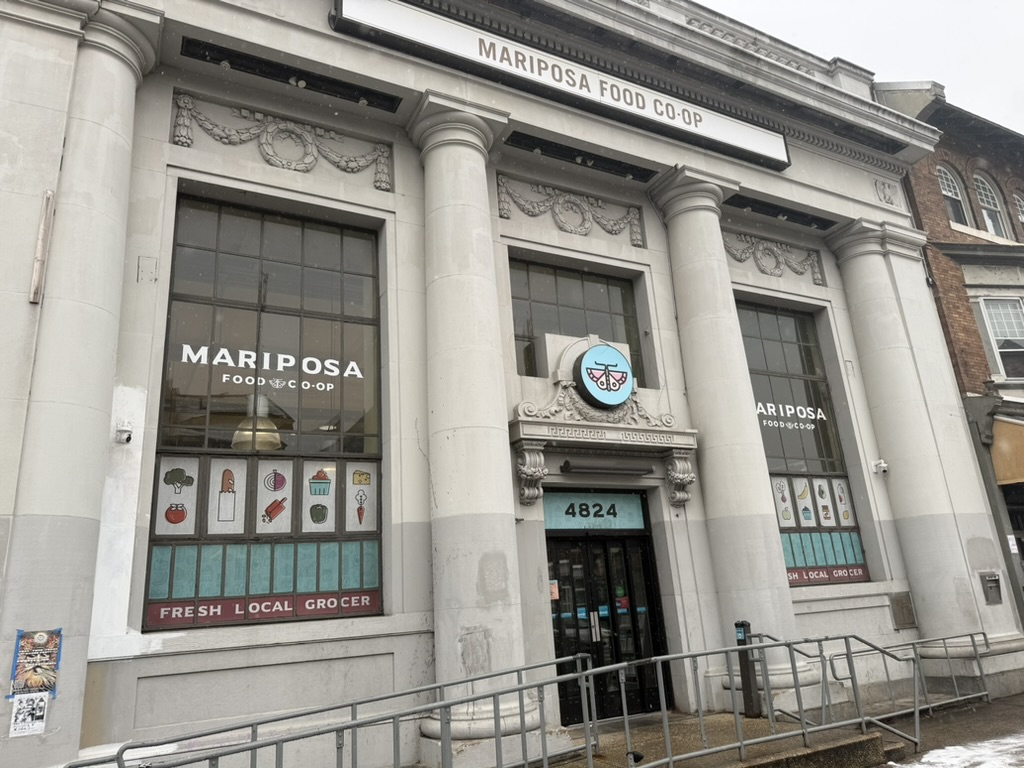
Mariposa Food Co-op at 48th and Baltimore is one of a handful of community-owned grocery stores in Philadelphia. Photo by Generocity.
Co-ops, or community-operated grocery stores, are typically owned by the community members who shop in the store. They have a say in what goes on their shelves and how much to price items for, with the community as a top priority. Some examples in Philadelphia include Weaver’s Way Co-op, South Philly Food Co-op, and Mariposa Food Co-op.
In the spring, Southwest Philly is set to gain a new market called The Community Grocer, which will be pioneering innovative ways to meet customers’ needs. The store has a resident action committee made up of neighbors, and they believe in “food as medicine.”
They will allow shoppers to purchase their groceries and then have them made into a hot meal. The space is also being used for job training and workshops.
Once it’s open, The Community Grocer will also be partnering with the University of Pennsylvania to do a study on postpartum recovery in new mothers. The Community Grocer will be giving them gift cards to shop while UPENN studies the effects of healthy food on the mothers’ mental and physical health.
Co-Founder of The Community Grocer, Eli Moraru, speaks to the impact that a community grocer can have in a neighborhood.
“I believe grocery stores are necessary in the future of our democracy,” said Moraru. “All it takes is innovation and intention.”
Project
Democracy & Human RightsTrending News


How Food Insecurity Impacts Us All
Read More >
What Generocity’s Top 10 Stories Reveal About Philadelphia in 2025, and what leaders should consider for 2026
Read More >