
What Young People Want Philadelphia-Area Leaders to Prioritize
 November 25, 2026
Category: Featured, Flourishing

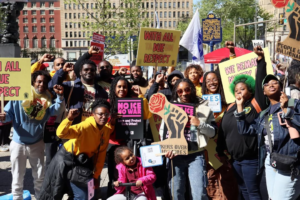
This year, Generocity launched the Young People’s Regional Congress. We partnered with several nonprofits across the five-county Philadelphia, Delaware, and Camden region to create monthly workshops. These workshops gave organizations a chance to share their experiences, discuss issues raised by their peers, and talk about the hopes and challenges their elders face. In July, we brought together young people and their organizational leaders at The National Constitution Center, to explore what they have in common and to consider what government and institutional leaders should prioritize to build a region that is prosperous, connected, and cared for.

After connecting virtually with youth leaders from around the world through our partnership with KidsRights and State of Youth, local young people shared what they had learned and experienced in their own communities to find common ground. Later, after lunch and a visit to the Constitution Center, they identified key needs and possible solutions. Three urgent and actionable priorities emerged for government officials, nonprofit leaders, and school administrators:
• Invest in free, accessible third spaces such as parks, recreation centers, libraries, and reimagined community spaces that are welcoming, well-used, and easy to find.
• Build mental health and grief support infrastructure by adding counselors, peer support, and grief education into schools, community centers, and public safety systems.
• Create real career pathways and economic opportunities for youth by connecting young people and low-income households with internships, mentors, financial literacy programs, and jobs starting at age 14.

Third Spaces
“We want leaders to provide third spaces that are free and accessible… filled with plants and trees.” – Young People’s Regional Congress participant
Third spaces connect almost every other concern raised. Youth mentorship, grief support groups, career fairs, community organizing, creative activities, and cleanups all need a place to gather. Without investment in these spaces, other priorities lose their foundation and impact.
Throughout their notes and ideas, the need for third spaces stood out as the central theme. Young people want more and better parks, recreation centers, libraries, and reimagined mall spaces that are free, welcoming, and easy for youth to access. They pointed out that many programs are underused because people do not know about them, and that these spaces should feel inviting, with plants and natural features.
Infrastructure for Mental Health and Grief Support
“The harm of unprocessed grief… invest in counselors, mental health, community wellness. Reduce stigma around seeking emotional and mental health support.” – Young People’s Regional Congress participant
Unprocessed grief and unmet mental health needs are at the root of many of the problems mentioned, such as learning gaps, financial stress, and community harm. Several young people specifically asked for police funding to be redirected to mental health services and for mental health professionals to work alongside public safety teams. This is not a minor issue; it is essential for community wellness and safety.
Our Congress participants often spoke about unprocessed grief, mental health stigma, and the lack of accessible emotional support for youth, teachers, parents, and whole communities. They described grief as economic, family-related, and linked to displacement. They asked for counselors in schools, optional peer grief groups during the school week, social-emotional learning for all ages, and support for teachers who are “overlooked, overworked, and mistreated by the education system.”
Tangible Pathways to Career and Economic Opportunity
“We want our leaders to give youth career and civic opportunities that lead to tangible change… increase programs that fund youth learning tangible and transferable skills.” – Young People’s Regional Congress participant
Many young people described financial stress as a main cause of disengagement, mental health struggles, and community instability. Graduates are having trouble finding work. Young people do not get early exposure to career paths. Without real pathways, youth disengage from civic life completely, and the cycle of disinvestment continues.
Our Congress participants want leaders to go beyond vague talk of “opportunity” and instead define clear, measurable pathways. They asked for programs that support real, transferable skill-building; direct links to internships, mentors, and employers; financial literacy from an early age; and easier job access for 14- and 15-year-olds. They also emphasized that these opportunities should not be just for youth – unemployed, single-income, and low-income households need them too. They called for a new definition of prosperity that goes beyond money, recognizing that economic opportunity alone is not enough without a sense of belonging and a civic voice.

The Through-Line
All three priorities call for putting care before control. The challenges they face are connected: unprocessed grief, financial stress, lack of safe gathering spaces, underfunded schools, limited job access for youth, and ongoing disinvestment in neighborhoods like Kensington. These are not separate problems – they intensify one another. When young people have nowhere safe to go, no one to talk to, and no path to economic stability, disengagement, mental health crises, and community harm follow.
This story is final piece in 2026’s Flourishing Series and was supported by People’s Media Fund, Pincus Family Foundation, and The Lenfest Institute for Journalism
Project
Democracy & Human RightsTrending News


Black Temp Workers in Philadelphia Fight for Dignity
Read More >